


Description
"Energies in the Feminine"
Amalia Salle, with a hybrid and tailor-made hip-hop, shapes Vivaldi’s Four Seasons, inhabited by five lively dancers. For one of her first creations, the young choreographer mixes urban dance and baroque music: a successful bet. A lively and joyful piece, Vivaldines displays an intoxicating burst of modernity.
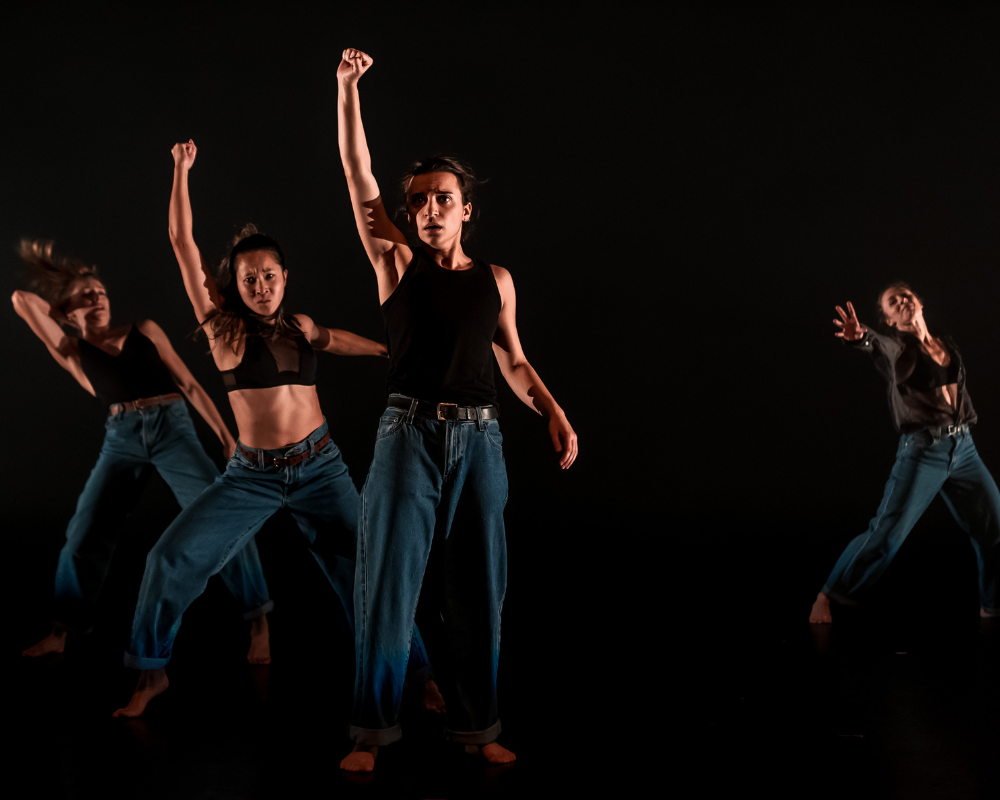
As for STUCK, Mounia Nassangar, international icon of whacking, signs her first choreographic piece. Through the prism of the sensitive, she reveals with a very singular look, the culture of this style born in the United States in the 1970s, on funk and disco rhythms. Driven by their personal stories, five performers with powerful bodies embody the vivid memory of an emergency practice born from oppression.
Waacking is an urban dance that originated in Los Angeles in the 1970s—at the height of the disco era—within the African American and Latinx LGBTQ+ community.
« Énergies au féminin »
Amalia Salle, façonne, avec un hip-hop hybride et sur mesure, Les Quatre Saisons de Vivaldi, habitées par cinq danseuses entraînantes. Pour l’une de ses premières créations, la jeune chorégraphe mêle danse urbaine et musique baroque : un pari réussi. Pièce à vif et joyeuse, Vivaldines déploie un éclat de modernité enivrant.
Quant à STUCK, Mounia Nassangar, icône internationale du whacking, signe sa première pièce chorégraphique. Par le prisme du sensible, elle y dévoile, avec un regard très singulier, la culture de ce style né aux États-Unis dans les années 1970, sur les rythmes funk et disco. Portées par leurs histoires personnelles, cinq interprètes aux corps puissants incarnent la mémoire vive d’une pratique d’urgence, née de l’oppression.
Le waacking est une danse urbaine née dans les années 1970 à Los Angeles, au sein de la communauté LGBTQ+ afro-américaine et latino-américaine, en pleine époque disco.